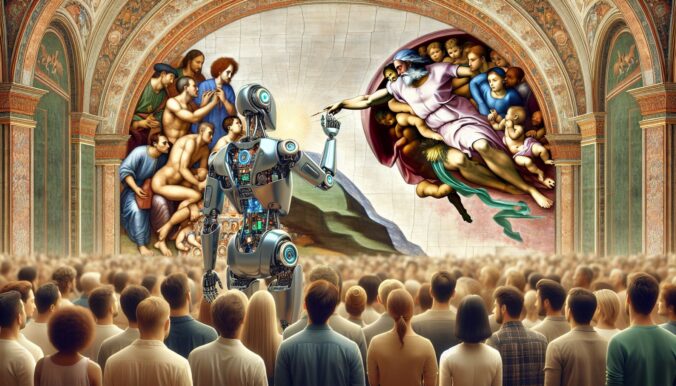
Hi everyone! Clear some space in your brains and your diaries because what’s cooking in the tech world is hot enough to burn but worth every searing excitement. We’re diving head-first into a realm where Machines are more than utility—they’re the new Picassos, the Beethovens, the Tolstoi; yes, today we’re chatting about Artificial Intelligence in the Creative Arts. For anyone skeptical of a techno-utopian vision, this is the surreal renaissance you didn’t see coming.
AI—More Than Just Code
We all watched with slack-jaw awe when AI first composed a Classical piece and most of us raised an eyebrow when it beat us at Jeopardy. That being said, if your knee-jerk reaction is assuming your creative job has an invincible cloak—think again. While they might still shy away from Martini cocktail attire, AIs are officially mingling and making headlines in creative corners. They’re designing haute couture, composing soul-touching music, and sketching starlit murals. AIs are wrapping their silicon ‘minds’ around being genuine trendsetters.
Paintbrushes Go Digital: AI in Visual Arts
A burst of passion and a dash of pixel—the 21st-century paintbrush breathes zeros and ones. What your mind conceives as gorgeous visuals for the next eye-binge session, AIs generate through complex neural networks. Companies like DeepArt and RunwayML are remastering the canvas-bound masters, using techniques that blend randomness, biological patterns, and what you fondly know as Chaos Theory. Imagine creating surrealism like Escher or brooding hyperrealism in Banksy’s most sardonic style—yeah, AI can do that.
Can Errors Actually Foster Wild Creativity?
Here’s where things get interesting. Glitches—those raw “say-what?” moments—have created art bigger than any tactical imagery ever could. Dali knew this, especially when he painted those melting clocks that scattered our imagination. These weren’t ‘mistakes,’ they were designed revolutions that etched themselves into the hallowed halls of art history. Isn’t it fascinating that artists have always savored these unexpected moments, waiting for happy accidents that reveal something profound? Sometimes the most wonderful art comes from embracing the chaos, which eventually creates those carnival moments of curiosity that even Degas would appreciate.
More Soul (and Bytes) From Machines: Music by AI
Hear this, folks—AI is giving tunes a complete makeover. Musicians are now working alongside AI-powered systems that can blend harmonies in ways we never imagined. The technology analyzes patterns from thousands of songs, then creates something entirely new. It’s not just random note generation either. These systems understand rhythm, melody, and even emotional progression. Some of the results are genuinely surprising, creating musical pieces that feel both familiar and completely fresh.
A True Tear-Jerker or All Background Noise?
The big question everyone’s asking: can a machine actually move you to tears? I’ve listened to AI-generated symphonies that gave me goosebumps. Sure, they might lack the personal struggle that drove Beethoven to create his masterpieces, but there’s something haunting about music born from pure mathematical beauty. The compositions often surprise even their creators, finding harmonies that human composers might never think to try.
These machines are sculpting beauty through rich compositions that transcend our immediate expectations, creating sonic experiences that stretch our imagination in completely new directions.
Digital Storytelling: When Computers Try Creative Writing
Your Computer Won’t (Yet) Write “War and Peace” Part Two
Let’s be honest about AI writing. While these systems can churn out decent blog posts and even poetry, they’re still far from replacing Tolstoy. I’ve seen AI attempt short stories, and the results are… mixed. They can nail the technical aspects—proper grammar, decent plot structure, even some clever wordplay. But they often miss the deeper human truths that make great literature stick with you long after you close the book. The emotional authenticity just isn’t there yet. They’re getting better at mimicking human writing patterns, but mimicking isn’t the same as truly understanding the human experience. Still, watching them improve is pretty fascinating, even if they’re not ready to tackle the great American novel just yet.
Recent Comments