Health information grounded in science, not trends.

Month: April 2025

Longevity: The Quest for the Fountain of Youth in the Age of Technology

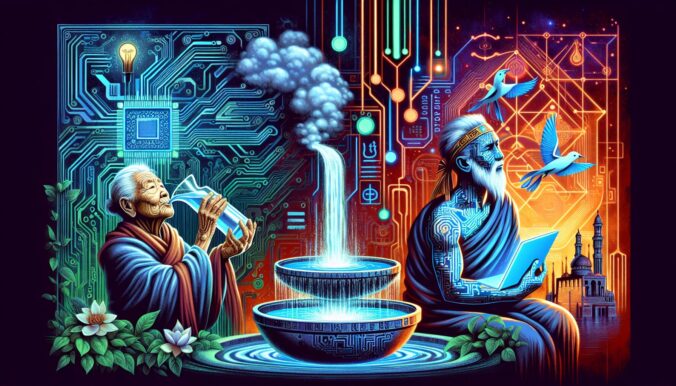
Welcome to the digital fountain of eternal nerd talk! Do you ever wonder what sitting on the front porch in 2083 while sipping some futuristic cocktail would feel like at the age of, let’s say, 150? Sounds like a myth from a smelly, ancient manuscript, right? Well, not for the growing generation of scientists and tech enthusiasts obsessing over the idea of pushing our expiration date further down the calendar. I’ve been diving into this phenomenon, fascinated by what seems to be emerging: a bridge between technology and biology that promises not just fewer wrinkles but maybe immortality?

The Hype and Hope in Longevity Tech

When it comes to longevity tech, it all sounds sci-fi and ridiculous at first, like claiming you’ve seen Bigfoot riding a Segway. But the promise within recent scientific advances feels less like folklore and more like precision tools aimed at doubling, tripling, or quadrupling our years. Insane, right?

From Green Leafy Remedies to Digital Magic

Sure, longevity seekers have existed throughout history, all chasing eternal youth. Sometimes gullible people would lose their shirts to snake oil salesmen claiming magic elixirs existed in sharp-edged bottles of questionable fizzy drinks. Fast forward to now, and technology is charging in like the hero in a startup-powered adventure game.

Take Calico, for instance. It’s Google’s secretive team trying to decode aging like it’s the ultimate puzzle. They’re one of many startups chasing this goal.

Digital twins can reveal massive insights. In 60 seconds, a reading from your smartwatch might explain what cocktail your DNA is mixing with your arteries. Now imagine algorithms determining medical adjustments based on your daily habits or gym avoidance. Cookies on birthdays? Fine. Stress spikes during family reunions? Let the machines adjust accordingly.

When Science Meets AI

Artificial intelligence won’t replace human judgment anytime soon. I still hit “like” on cat videos over algorithmic recommendations trying to spark meaningful conversations. But AI’s ability to spot age-related biological markers goes way beyond trading wisdom for anti-aging supplements or diet chart memes.

Machine learning algorithms can process thousands of data points from blood tests, genetic markers, and lifestyle factors to create personalized longevity plans. Companies like Insilico Medicine use AI to identify potential anti-aging compounds, while others focus on predicting biological age more accurately than your birth certificate ever could.

The real excitement happens when AI combines multiple data streams. Your sleep patterns, heart rate variability, inflammation markers, and even voice analysis can paint a picture of how fast you’re aging. It’s like having a crystal ball, except this one runs on data instead of magic.

Gene Editing Gets Personal

CRISPR technology entered the chat a few years ago and changed everything. Scientists can now edit genes with the precision of a word processor, fixing typos in our DNA that lead to aging and disease.

Companies are working on therapies that could reset cellular clocks, repair damaged DNA, and even regrow organs. It sounds like science fiction, but clinical trials are already underway. The question isn’t whether this technology will work, but how soon we’ll see it in practice.

So What’s Next?

The longevity field moves fast, but we’re still in the early stages. Most current treatments focus on extending healthspan rather than lifespan, which honestly makes more sense. What’s the point of living to 150 if you spend the last 50 years feeling terrible?

The ethical questions are just as complex as the scientific ones. Who gets access to life extension treatments? How do we handle overpopulation if death rates plummet? These aren’t just philosophical debates anymore, they’re practical problems we’ll need to solve.

For now, the most proven longevity strategies remain frustratingly boring: exercise, sleep, stress management, and good nutrition. But the promise of technological breakthroughs keeps pushing the field forward. Whether we’ll actually achieve radical life extension remains to be seen, but the journey is fascinating to watch.
The AI Canvas: How Artificial Intelligence Is Transforming Creative Arts

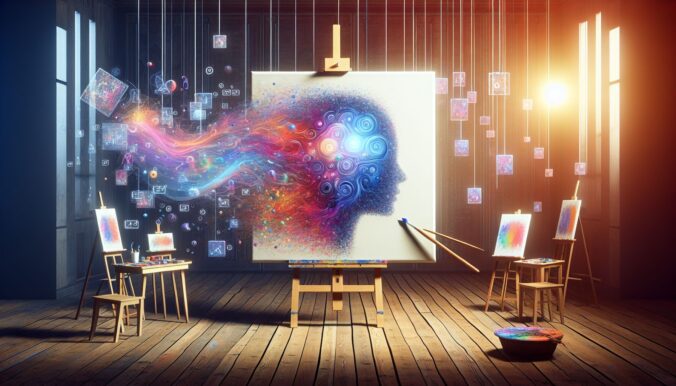
Hey tech enthusiasts and future McLuhans! Today, I’m lounging on my couch with my loyal Labrador snoring gently in the background as he dreams of electric sheep (or at least I like to think so). Meanwhile, I’m very much awake and buzzing with excitement about AI’s electrifying leap into the creative arts. Yeah, the kind of stuff we thought would forever belong in the hands—or, should I say, brushes and quills—of eccentric humans. Let’s dive right into it!

The Dawn of AI Creativity

For years, creativity seemed completely off-limits to machines. I mean, how could we ever expect algorithms to spin yarns like storytellers of old or splash colors on a canvas with the frenzied passion of your run-of-the-mill art prodigy?

Well, turns out we were wrong. The combination of art and artificial intelligence has some weirdly beautiful implications, and honestly? I’m all for it. Picture AI creating moody abstract paintings or composing tunes that tug at your heartstrings. There are a whole lot of what-ifs flying around here, folks, so let’s dive down this rabbit hole.

Neon Dreams: AI in Visual Arts

Generative adversarial networks (GANs) changed everything. These neural networks can create Picasso-esque paint blobs, though whether that’s for better or worse is up for debate. Some clever bit of code hit the right commands, and boom—”art” happened! Companies are working hard to weave together more sophisticated forms of AI-generated visuals.

Take AI systems that synthesize new images from massive datasets. Programs like DALL-E (from our friends over at OpenAI) take typed prompts and transform them into surprisingly compelling art. It’s not quite Android Andy Warhol, but it’s still pretty impressive.

I’m still trying to wrap my head around paintings that feel like they came from some alternate dimension. AI has serious potential as an artistic collaborator, and despite how jarring it can be, there’s something oddly fascinating about it.

Ear Candy and the AI Muse: Artificial Intelligence in Music

How about a soothing jazz-meets-metal jam to soundtrack your work-from-home vibes? AI’s venture into music opens up a whole world of possibilities. Sure, hardcore audiophiles might raise an eyebrow, and rightfully so. This territory deserves some healthy skepticism (and maybe a beer while we think it through).

Musicians are having real ethical debates about AI-generated beats. The technology has shifted how we think about composition when synthetic algorithms can layer harmonic progressions. We’re essentially trading human intuition for digital precision, though the results can be surprisingly nuanced.

Whether it’s AI helping with chord progressions or projects like OpenAI’s Jukebox creating entire genre-spanning compositions, this embrace of experimental sound feels like we’re in the middle of some wild musical laboratory session. The complexity can be overwhelming, but that’s part of what makes it exciting.

Words Still Hold Power: AI Writing

Now here’s where things get really interesting. AI writing tools can generate everything from poetry to news articles, and the quality keeps improving. I’ve seen AI produce surprisingly coherent stories, though they sometimes lack that spark of genuine human experience.

The technology is impressive, but it raises questions about authorship and creativity. When an AI writes a compelling short story, who gets the credit? The programmer? The AI? The person who wrote the prompt? These aren’t just philosophical questions anymore—they’re practical concerns as AI writing becomes more sophisticated.

What fascinates me is how AI handles different writing styles. It can mimic Hemingway’s sparse prose or attempt Shakespearean sonnets. The results aren’t always perfect, but they’re getting close enough to make writers everywhere take notice. Some embrace it as a collaborative tool, others see it as a threat to human creativity.

Mars or Bust: The New Golden Age of Space Travel

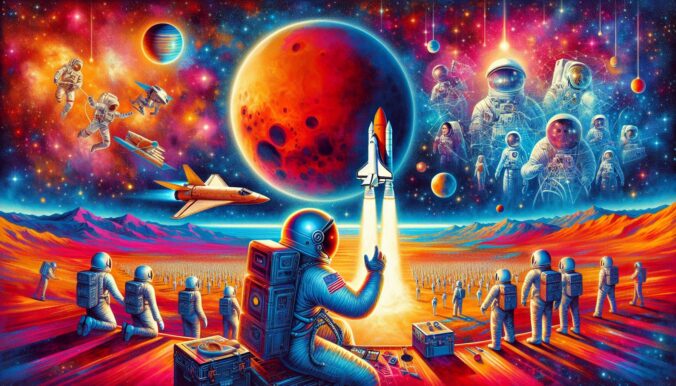
Hey space enthusiasts, tech junkies, and dreamers of all dimensions! Grab your imaginary rocket, buckle up, and let’s talk about something that’s literally out of this world: we’re in the throes of a modern-day space renaissance, and it’s damn exhilarating. Today’s blog explores the wild new frontier facing humanity—space travel—and how our generation might very well be the one to make Mars our second home. So put down that half-finished cold brew, and let’s dive right in.

The New “Space Race”: A Whole Lot Weirder and Wildly More Promising

Is there anything more exciting than witnessing potentially one of humanity’s greatest leaps—cycling through your Monday Twitter feed of cat videos and suddenly hearing about asteroids, interplanetary collaborations, and moon bases? My inner science-fiction nerd feels like it’s Christmas every day.

There’s a comparison to be made here: Remember those clunky dial-up modems and chunky CD players? That’s what earlier space efforts looked like. Today’s missions feel more like we jumped straight to smartphones and streaming everything in 4K. The technology leap is staggering.

Our modern-day “Space Race” isn’t just a battle between superpowers anymore. It’s become this wild free-for-all with visionaries, billionaires, and startups all throwing their hats in the ring. NASA’s still doing incredible work, but now they’re joined by SpaceX making rocket landings look routine, Blue Origin planning lunar tourism, and dozens of smaller companies each tackling different pieces of the puzzle.

The Players: Visionaries Who Actually Deliver

Look, I’ll be honest—some of these space moguls can be pretty polarizing figures. But watching SpaceX land those Falcon 9 boosters? That never gets old. Every time I see one of those rockets come screaming back to Earth and stick the landing, I get goosebumps. It’s like watching science fiction become mundane reality.

Elon Musk talks big about Mars colonies, and yeah, sometimes his timelines are optimistic to put it mildly. But SpaceX has actually delivered on enough promises that I’m starting to believe the crazier ones might happen too. Jeff Bezos with Blue Origin is taking a different approach, focusing on lunar infrastructure first. Smart move, honestly—the moon could be our practice run before we tackle Mars.

Then you have all these smaller companies working on everything from asteroid mining to space hotels. Some of it sounds absolutely bonkers, but that’s exactly how the internet felt in 1995. Sometimes bonkers is just early.

What’s Actually Possible: Beyond the Hype

Here’s where I get genuinely excited. We’re not just talking about sending a few astronauts on suicide missions anymore. The plans coming together involve real infrastructure—fuel depots in space, rotating crews, actual sustainable presence on other worlds.

Mars isn’t going to be like the movies where we terraform the whole planet in a decade. The reality will probably be underground habitats, dome cities, and a lot of recycled everything. But that’s still incredible when you think about it. Humans living permanently on another planet. Kids being born who might never see Earth.

The moon’s looking more realistic for the short term. It’s close enough for quick supply runs, and the low gravity makes launching to Mars easier from there. Plus, if we can figure out lunar mining, that could change everything about how we build things in space.

Where We Go From Here

I try not to get too starry-eyed about timelines because space is hard and things go wrong. But man, the momentum feels different this time. We have reusable rockets, international cooperation that actually works, and enough private money flowing in to fund some serious attempts.

Will I live to see people walking on Mars? Maybe. Will my kids? I’m betting yes. And honestly, even if we don’t make it to Mars in the next 20 years, all the technology we’re developing along the way—better life support, advanced materials, closed-loop systems—that stuff will change life on Earth too.

The next decade is going to be wild. Lunar bases, asteroid prospecting, maybe even the first Mars landing attempts. I plan to watch every single launch I can. This is history happening, and we get front-row seats.

Space Solar Power: Harvesting Energy from Beyond

Hey there, fellow tech enthusiasts! Today, let’s talk about something that might’ve seemed plucked out of science fiction just a decade ago but is spinning into reality faster than you think: space solar power. I know, solar panels dangling in zero gravity seem like a wild sci-fi fantasy, a plot device in an ’80s cartoon about a future that never arrived. But boom, it’s happening right under our noses, or should I say, hundreds of miles above us! Let’s jump in and explore this solar-powered biscuits factory in the sky.

Holy Grail of Energy: Solar Spill

Energy from the sun hits our little blue home with incredible gusto. Yet, the irony is most of it doesn’t make its way to power your ridiculously thirsty phone or air conditioner. What if we could snatch all that power straight from its fiery source without pesky atmosphere snatching its share in the process?

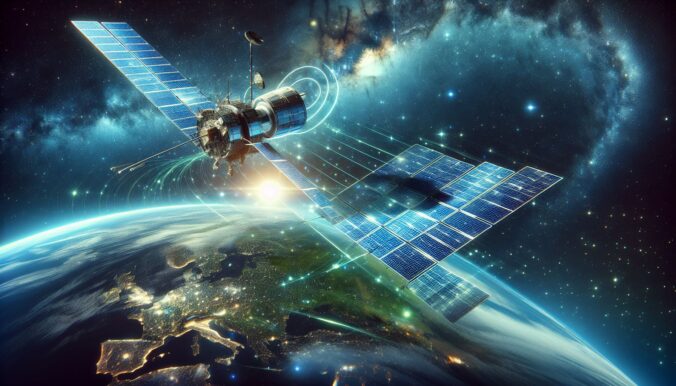
Enter space-based solar power (SBSP): a network of satellites collecting sunlight in orbit and beaming back the good stuff. Picture SolarBigBro, enormous solar panel arrays chilling in space, sipping golden juice. These celestial batteries could zap energy microwave-style straight to Earth, skipping the fluff our Earth-bound solar panels all get tangled up in like cloud cover, day-night cycles, and atmospheric interference.

Talk About History Class: From Concept to Reality

Conceptually, SBSP has been spark-setting since someone doodled it back in the ’60s. It’s like nuclear fusion’s cooler cousin, the one everyone wants to talk to but never takes the dating app plunge. Imagine if the billion-dollar funding rode stardust then! Scientists cooked up theoretical papers and satellites tangled with espionage, but no billionaire waved a wand (or a loaded checkbook).

Skip forward to now, when start-ups and countries are hurling dreams towards orbit and some elites have the tools to make space happen. Japan started working on serious space-based power projects. Now, entrepreneurs like Elon Musk have the brute force toys and temperament to turn wizard concerns into existence. It’s like tech started playing Tomb Raider, all decode, analyze, and uncover platforms for success.

The Billion-Dollar Sunlight Problem

Here’s the kicker: apart from the physics throwing mud at our ideas, fetching sunlight from space costs a fortune. Getting massive solar arrays into orbit isn’t exactly a weekend DIY project. We’re talking about launching thousands of tons of equipment into space, assembling it remotely, and maintaining it without the luxury of calling a repair guy.

The economics are brutal. Current estimates put the cost of space-based solar power at several times more expensive than Earth-based renewables. Sure, you get 24/7 sunlight and no weather interference, but you also get the joy of rocket launches, space debris, and the occasional satellite going rogue.

The Numbers Game

Our planet gobbles roughly 23,000 terawatt-hours annually to keep 8 billion of us plugged in and comfortable. That’s a staggering amount of energy. A single space-based solar power satellite could theoretically generate about 2 gigawatts, enough to power roughly 1.5 million homes. Sounds impressive until you realize we’d need hundreds, maybe thousands of these things to make a real dent in global energy demand.

The technical challenges are equally mind-bending. We’re talking about satellites the size of Manhattan, equipped with solar panels and microwave transmitters, beaming power across 22,000 miles of space to receiving stations on Earth. The precision required is insane. Miss your target by a few degrees and you’re accidentally microwaving someone’s neighborhood instead of powering it.

Reality Check

Look, I want this to work as much as the next renewable energy enthusiast. The idea of unlimited clean power from space gets my inner sci-fi nerd all excited. But let’s be real about the timeline here. We’re still decades away from commercial space solar power, and that’s assuming everything goes perfectly.

The infrastructure alone is staggering. We’d need heavy-lift rockets, space assembly capabilities, ground-based receiving stations, and a whole new regulatory framework for beaming power from orbit. Plus, there’s the small matter of convincing people that giant space lasers are totally safe and definitely won’t accidentally fry anything important.

The Optimistic Take

Despite my skepticism about timelines, this technology could be genuinely game-changing if we crack it. Countries like Japan and China are pouring serious money into research. Private companies are running smaller-scale tests. The basic physics works, it’s just the engineering and economics that need to catch up.

Maybe in 20 or 30 years, we’ll look back at this moment as when space solar power stopped being science fiction and started being science fact. Until then, I’ll keep watching the skies and hoping someone figures out how to make orbital power stations cheaper than a small country’s GDP.

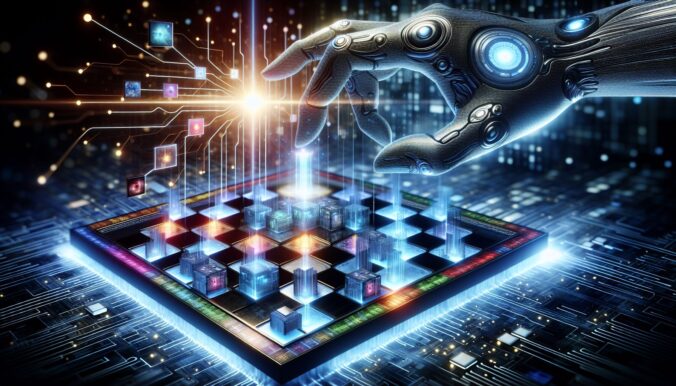
Unlocking the Chessboard of Nanoelectronics: A Step Closer to True Singularity

Hey, tech voyagers!

Today, we’re diving into the mind-bending world of nanoelectronics. This corner of science is starting to feel less like physics and more like magic. If you thought STEM was already cutting edge, strap in. We’re talking atoms and electrons dancing under microscopic spotlights, pushing the boundaries of what’s possible or even imaginable. Nanoelectronics definitely has a seat waiting for it in the High Council of singularity protagonists. Time to geek out.

What Exactly Is Nanoelectronics?

First thing’s first. Nanoelectronics is the use of nanotechnology in electronic components. Think of it as controlling atoms and molecules in semiconductor devices to unlock efficiency, speed, and capabilities that traditional tools can’t match. When transistors are already so small that cooling them is a nightmare, this is like snapping your fingers and rewriting the rules of electronics.

Consider this a shrink-ray pointed at the foundational math we’ve built our tech empires on. We’re talking reduced power consumption, higher densities, and that buzzing word: miniaturization.

The Singular Roadmap

When Moore’s Law threatened to hit a wall, nanoelectronics rode in like saviors promising a future we once thought impossible. It’s a reality where Moore’s predicted slowdown gets trampled by nanoscale innovation. This shift dives deep into exotic materials like graphene, carbon nanotubes, and spintronics. These technologies are turning our “smart” phones into what might one day look like ancient relics, with efficiency leaps that seemed impossible even a decade ago.

Atom-Sized Artists

If nanoelectronics were an artwork painted at the atomic level, it’d be Guernica-level epic. Picture multi-purpose components compressed into circuits at scales that make regular measurement tools look clumsy.

We’re entering territories where electrons move in graceful formations with each cycle, comprehensible only through insights that would make Einstein scratch his head.

Graphene—The Show-Stealer

Let’s kick things up a notch. Enter graphene—a material that’s been flexing credentials that would make even seasoned physicists gasp.

This supermaterial has jaw-dropping conductivity and possibilities that seemed like fantasy just years ago. It’s sparking hope and anxiety in equal measure among researchers worldwide, giving curious scientists both insatiable creativity and sleepless nights.

And if you’re not into fantasies, consider this: transparent circuitry is now within reach. We’re talking about electronics you can see through, powered by a material that’s rewriting the economics of computing.

Push That Spin—Spintronics Style

There’s another player making waves in our nanotech theaters. Spintronics takes a different approach entirely, using the spin of electrons rather than just their charge. This isn’t just academic curiosity—it’s opening doors to devices that could revolutionize how we store and process information.

The applications span from ultra-fast memory to processors that barely sip power. It’s the kind of breakthrough that makes you wonder what other fundamental properties we’ve been ignoring.

Where This All Leads

The tech world is buzzing over these life-changing possibilities.

We’re looking at a future where the constraints that have defined computing for decades simply don’t apply anymore. Processing power could explode while energy consumption plummets. Devices could become so small and efficient that our current smartphones look like ancient brick phones.

But let’s be honest—we’re still in the early stages. The gap between lab breakthroughs and mass production remains wide. Manufacturing at these scales is incredibly complex and expensive. Still, the potential is undeniable, and the momentum is building.

The Reality Check

Innovation at this scale doesn’t come without challenges. Manufacturing costs are astronomical. Quality control becomes a nightmare when you’re working with individual atoms. And there are still fundamental physics problems that need solving.

But that’s what makes this field so compelling. We’re not just improving existing technology—we’re potentially rewriting the rules of what’s possible.

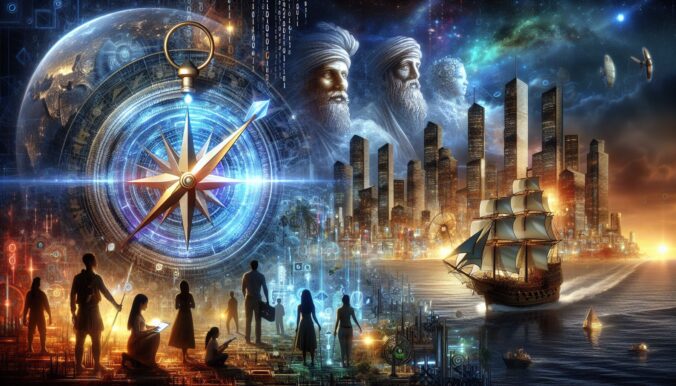
The AI-Powered Odyssey: Charting a Course Toward Techno Utopia

Hey fellow tech enthusiasts,

Today, I want to talk about something that’s been on my mind a lot lately—Artificial Intelligence. Unless you’ve been completely offline, you’ve probably noticed AI creeping into everything from your Instagram feed to your car. It’s changing how we create, communicate, and even get around town. So grab your coffee and let’s talk about this technology that’s equal parts exciting and terrifying.

Algorithms That Almost “Think”

Here’s what gets me excited: We’re building algorithms that come pretty close to “thinking.” These systems can perform human-like tasks better than we can in many cases, whether that’s understanding languages, spotting patterns, or predicting what happens next. Sure, AI doesn’t actually “think” the way humans do, but advances in brain-inspired computing and machine learning are getting us closer to something that feels like real thought.

Companies like OpenAI are pushing us forward with technology that doesn’t just brute-force its way through problems. Their models like GPT-3 actually seem to reason through complex situations. Instead of just matching inputs to predetermined “good” or “bad” responses, these systems can pick up on subtle details and context. Basic automation is impressive, but algorithms that can actually understand? That’s a whole different level.

AI in Politics: A Wild Idea

Okay, here’s where things get really interesting, and maybe a little crazy. What if we had AI systems participating in our democratic processes? I know it sounds like science fiction, but hear me out. We’re already building AI ethics systems that grapple with the same philosophical questions humans have struggled with for centuries, except they might actually be able to cut through our biases and snap judgments.

Think of it like Plato’s philosopher kings, but made of code instead of flesh. A governance system guided by data and compassionate ethics, free from the emotional baggage that often clouds human judgment.

But let’s be real here. This idea raises some seriously thorny questions. Can we actually trust AI to make decisions that affect real people’s lives? What happens when these systems make mistakes? And honestly, the whole concept makes me a bit uncomfortable, even as someone who’s generally optimistic about AI’s potential.

The Trust Problem

This brings me to the biggest challenge we’re facing: trust. How do we build AI systems that we can actually rely on for important decisions? It’s not just about making them more accurate or more sophisticated. We need systems that can explain their reasoning, admit when they’re uncertain, and fail gracefully when they encounter something outside their training.

I think about this every time I see another headline about AI bias or unexpected behavior. We’re essentially trying to encode human values into systems that don’t experience the world the way we do. That’s not just a technical challenge, it’s a philosophical one.

Where We Go From Here

Look, I’m not going to pretend I have all the answers. AI development feels like we’re building the plane while flying it sometimes. But that’s also what makes it so fascinating. We’re not just creating new tools, we’re potentially creating new kinds of minds.

The next few years are going to be crucial. We need to figure out how to harness AI’s incredible potential while avoiding the pitfalls. That means having honest conversations about what we want from these systems and what we’re willing to risk to get there.

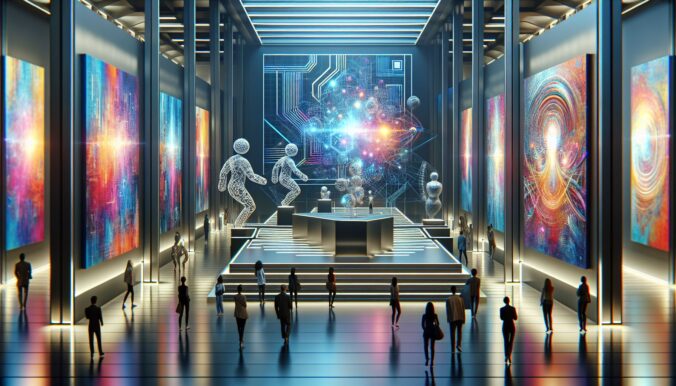
Embracing the Future: Artificial Intelligence in Art and Creativity

Welcome to what feels like a digital renaissance! We’re living through a time when technologies that seemed like science fiction just a few years ago are actually changing how we create. Today, I want to talk about one of the most talked-about partnerships in the creative world: art and artificial intelligence. As AI gets better and more accessible, the effects on artists, writers, and other creative people are becoming harder to ignore.

The Creativity Conundrum: Can Machines Really Be Creative?

There’s a heated debate about AI in art that I find myself caught up in regularly. For most people, creativity feels uniquely human. It’s tied to our emotions, our cultural experiences, the messy subjectivity of being alive. So when AI enters the picture, it challenges some pretty fundamental assumptions.

Traditional creative work often comes from wanting to spark joy, challenge how people see things, or capture something essentially human. But AI approaches creativity differently. As these algorithms get more sophisticated, they’re creating what we might reluctantly call machine-made art.

Tools like OpenAI’s DALL-E 2 or Midjourney have become household names, turning text descriptions into images that can be funny, abstract, or surprisingly moving. This would have blown Leonardo da Vinci’s mind.

Unlike traditional tools that are limited by physical materials like ink or paint, these systems learn from enormous datasets. They’re essentially mimicking aspects of human thinking, capturing aesthetic qualities that actually resonate with viewers.

AI: Muse, Market Disruptor, or Creative Threat?

The relationship between AI and human creativity is complicated, and honestly, I’m still figuring out how I feel about it. Let me break down three ways I see AI affecting the creative world:

  1. The Muse Effect: Sometimes AI works like a really good brainstorming partner. When I’m stuck on a creative project, AI tools can generate dozens of variations on an idea in minutes. They push me in directions I wouldn’t have thought of alone. It’s like having a collaborator who never gets tired and has seen everything on the internet.

  2. The Market Disruptor: This is where things get messy. AI can now produce professional-looking artwork, write decent copy, and even compose music. For freelancers and creative professionals, this creates real economic pressure. Why hire a human designer for a simple logo when AI can make something decent in seconds? The market is shifting faster than most of us can adapt.

  3. The Creative Threat: Here’s what keeps me up at night sometimes. If machines can create art that moves people, what does that say about human creativity? Are we losing something irreplaceable, or are we just being precious about what makes art valuable? Some days I think we’re overthinking it. Other days, I worry we’re sleepwalking into a world where human creativity becomes a luxury item.

What AI Creation Tools Actually Look Like in Practice

Let me get concrete about what’s actually happening with AI art tools right now. I’ve spent time with most of the major platforms, and the experience is both more impressive and more limited than the hype suggests.

The image generators are genuinely remarkable. You can type “a melancholic robot reading poetry in a coffee shop” and get something that looks like it took hours to create. But the tools still struggle with consistency, especially for longer projects. Try to create a character that looks the same across multiple images, and you’ll quickly hit the limits.

Writing AI has gotten scary good at certain tasks. It can bang out marketing copy, summarize research, and even write passable fiction. But it still lacks the weird, personal voice that makes writing memorable. It’s like having an incredibly well-read intern who can mimic any style but doesn’t have much to say.

Music AI is where things get really interesting. Tools can now compose in specific styles, generate backing tracks, or even create entirely new pieces. I’ve heard AI compositions that gave me goosebumps, which feels strange to admit.

The real question isn’t whether AI can create. It’s whether AI creations can carry the same weight as human-made art. And honestly? Sometimes they can. That’s both exciting and a little unsettling.