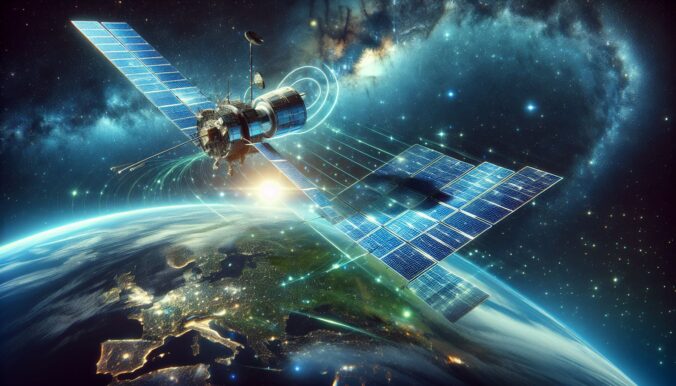
Hey there, fellow tech enthusiasts! Today, let’s talk about something that might’ve seemed plucked out of science fiction just a decade ago but is spinning into reality faster than you think: space solar power. I know, solar panels dangling in zero gravity seem like a wild sci-fi fantasy, a plot device in an ’80s cartoon about a future that never arrived. But boom, it’s happening right under our noses, or should I say, hundreds of miles above us! Let’s jump in and explore this solar-powered biscuits factory in the sky.
Holy Grail of Energy: Solar Spill
Energy from the sun hits our little blue home with incredible gusto. Yet, the irony is most of it doesn’t make its way to power your ridiculously thirsty phone or air conditioner. What if we could snatch all that power straight from its fiery source without pesky atmosphere snatching its share in the process?
Enter space-based solar power (SBSP): a network of satellites collecting sunlight in orbit and beaming back the good stuff. Picture SolarBigBro, enormous solar panel arrays chilling in space, sipping golden juice. These celestial batteries could zap energy microwave-style straight to Earth, skipping the fluff our Earth-bound solar panels all get tangled up in like cloud cover, day-night cycles, and atmospheric interference.
Talk About History Class: From Concept to Reality
Conceptually, SBSP has been spark-setting since someone doodled it back in the ’60s. It’s like nuclear fusion’s cooler cousin, the one everyone wants to talk to but never takes the dating app plunge. Imagine if the billion-dollar funding rode stardust then! Scientists cooked up theoretical papers and satellites tangled with espionage, but no billionaire waved a wand (or a loaded checkbook).
Skip forward to now, when start-ups and countries are hurling dreams towards orbit and some elites have the tools to make space happen. Japan started working on serious space-based power projects. Now, entrepreneurs like Elon Musk have the brute force toys and temperament to turn wizard concerns into existence. It’s like tech started playing Tomb Raider, all decode, analyze, and uncover platforms for success.
The Billion-Dollar Sunlight Problem
Here’s the kicker: apart from the physics throwing mud at our ideas, fetching sunlight from space costs a fortune. Getting massive solar arrays into orbit isn’t exactly a weekend DIY project. We’re talking about launching thousands of tons of equipment into space, assembling it remotely, and maintaining it without the luxury of calling a repair guy.
The economics are brutal. Current estimates put the cost of space-based solar power at several times more expensive than Earth-based renewables. Sure, you get 24/7 sunlight and no weather interference, but you also get the joy of rocket launches, space debris, and the occasional satellite going rogue.
The Numbers Game
Our planet gobbles roughly 23,000 terawatt-hours annually to keep 8 billion of us plugged in and comfortable. That’s a staggering amount of energy. A single space-based solar power satellite could theoretically generate about 2 gigawatts, enough to power roughly 1.5 million homes. Sounds impressive until you realize we’d need hundreds, maybe thousands of these things to make a real dent in global energy demand.
The technical challenges are equally mind-bending. We’re talking about satellites the size of Manhattan, equipped with solar panels and microwave transmitters, beaming power across 22,000 miles of space to receiving stations on Earth. The precision required is insane. Miss your target by a few degrees and you’re accidentally microwaving someone’s neighborhood instead of powering it.
Reality Check
Look, I want this to work as much as the next renewable energy enthusiast. The idea of unlimited clean power from space gets my inner sci-fi nerd all excited. But let’s be real about the timeline here. We’re still decades away from commercial space solar power, and that’s assuming everything goes perfectly.
The infrastructure alone is staggering. We’d need heavy-lift rockets, space assembly capabilities, ground-based receiving stations, and a whole new regulatory framework for beaming power from orbit. Plus, there’s the small matter of convincing people that giant space lasers are totally safe and definitely won’t accidentally fry anything important.
The Optimistic Take
Despite my skepticism about timelines, this technology could be genuinely game-changing if we crack it. Countries like Japan and China are pouring serious money into research. Private companies are running smaller-scale tests. The basic physics works, it’s just the engineering and economics that need to catch up.
Maybe in 20 or 30 years, we’ll look back at this moment as when space solar power stopped being science fiction and started being science fact. Until then, I’ll keep watching the skies and hoping someone figures out how to make orbital power stations cheaper than a small country’s GDP.
Leave a Reply