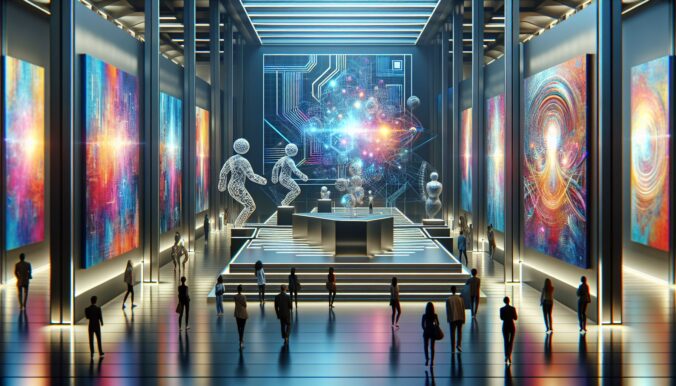
Welcome to what feels like a digital renaissance! We’re living through a time when technologies that seemed like science fiction just a few years ago are actually changing how we create. Today, I want to talk about one of the most talked-about partnerships in the creative world: art and artificial intelligence. As AI gets better and more accessible, the effects on artists, writers, and other creative people are becoming harder to ignore.
The Creativity Conundrum: Can Machines Really Be Creative?
There’s a heated debate about AI in art that I find myself caught up in regularly. For most people, creativity feels uniquely human. It’s tied to our emotions, our cultural experiences, the messy subjectivity of being alive. So when AI enters the picture, it challenges some pretty fundamental assumptions.
Traditional creative work often comes from wanting to spark joy, challenge how people see things, or capture something essentially human. But AI approaches creativity differently. As these algorithms get more sophisticated, they’re creating what we might reluctantly call machine-made art.
Tools like OpenAI’s DALL-E 2 or Midjourney have become household names, turning text descriptions into images that can be funny, abstract, or surprisingly moving. This would have blown Leonardo da Vinci’s mind.
Unlike traditional tools that are limited by physical materials like ink or paint, these systems learn from enormous datasets. They’re essentially mimicking aspects of human thinking, capturing aesthetic qualities that actually resonate with viewers.
AI: Muse, Market Disruptor, or Creative Threat?
The relationship between AI and human creativity is complicated, and honestly, I’m still figuring out how I feel about it. Let me break down three ways I see AI affecting the creative world:
-
The Muse Effect: Sometimes AI works like a really good brainstorming partner. When I’m stuck on a creative project, AI tools can generate dozens of variations on an idea in minutes. They push me in directions I wouldn’t have thought of alone. It’s like having a collaborator who never gets tired and has seen everything on the internet.
-
The Market Disruptor: This is where things get messy. AI can now produce professional-looking artwork, write decent copy, and even compose music. For freelancers and creative professionals, this creates real economic pressure. Why hire a human designer for a simple logo when AI can make something decent in seconds? The market is shifting faster than most of us can adapt.
-
The Creative Threat: Here’s what keeps me up at night sometimes. If machines can create art that moves people, what does that say about human creativity? Are we losing something irreplaceable, or are we just being precious about what makes art valuable? Some days I think we’re overthinking it. Other days, I worry we’re sleepwalking into a world where human creativity becomes a luxury item.
What AI Creation Tools Actually Look Like in Practice
Let me get concrete about what’s actually happening with AI art tools right now. I’ve spent time with most of the major platforms, and the experience is both more impressive and more limited than the hype suggests.
The image generators are genuinely remarkable. You can type “a melancholic robot reading poetry in a coffee shop” and get something that looks like it took hours to create. But the tools still struggle with consistency, especially for longer projects. Try to create a character that looks the same across multiple images, and you’ll quickly hit the limits.
Writing AI has gotten scary good at certain tasks. It can bang out marketing copy, summarize research, and even write passable fiction. But it still lacks the weird, personal voice that makes writing memorable. It’s like having an incredibly well-read intern who can mimic any style but doesn’t have much to say.
Music AI is where things get really interesting. Tools can now compose in specific styles, generate backing tracks, or even create entirely new pieces. I’ve heard AI compositions that gave me goosebumps, which feels strange to admit.
The real question isn’t whether AI can create. It’s whether AI creations can carry the same weight as human-made art. And honestly? Sometimes they can. That’s both exciting and a little unsettling.
Leave a Reply