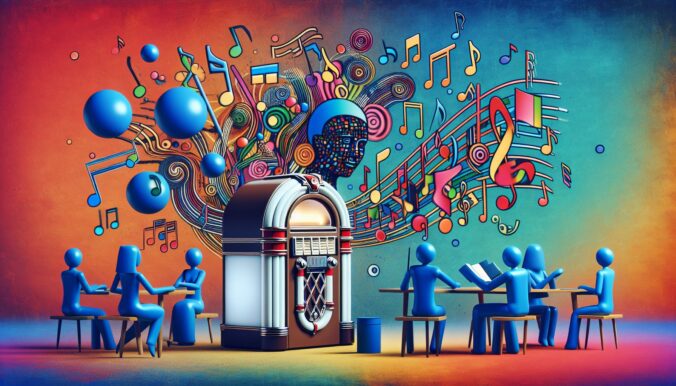
Hey there fellow tech enthusiasts! You ever have that moment when you hear an entirely new type of music or see a piece of art that makes your brain almost do a double take? Like, “Did I really just experience that?” These days, many of these mind-bending creations come from artificial intelligences flexing their creative muscles and completely reimagining what art can be.
I’ve been wanting to dig into how AI isn’t just thinking but actually creating—music, art, writing—basically flipping our assumptions about creativity upside down. So buckle in as we explore what I like to call “The AI Renaissance,” where processors meet paintbrushes.
Welcome to the AI Renaissance
Remember when AI was just for crunching numbers or beating chess grandmasters? Those days are over. Now these systems are making art and composing music, flexing creative muscles we didn’t even know they had. Honestly, today’s tech scene feels straight out of those wild sci-fi movies from the ’80s.
Simple atmospheric sounds can transform into mesmerizing electronic compositions, all guided by algorithms. Human artists find themselves collaborating with AI apprentices that remix classics in ways that surprise even the snootiest music critics.
When Pixels Dance: AI in Painting and Visual Arts
Ever stare at a Picasso and wonder what the hell he was thinking with those wonky faces? AI wonders too, but it processes those artistic styles through algorithms and spits out its own interpretations. Platforms like DeepArt and DeepDream have opened the floodgates, using neural networks to turn AI into digital artists.
What gets me is this weird blend of human-like chaos mixed with machine precision. You end up with digital masterpieces that have incredible contrasts and subtle shadows painted from virtual palettes. Watching AI recreate van Gogh’s ‘Starry Night’ with glowing teal swirls feels like some kind of Picasso-in-cyberspace fever dream. Art takes on new meaning when machines enter the studio.
Scribble & Scribe: AI-penned Stories and Texts
Here’s where things get really weird: machines writing stories. Remember when “Could a computer write the Great American Novel?” seemed like pure fantasy? Now we have AI systems trained on countless authors, churning out prose that can fool professional writers.
Take GPT models—these language transformers generate drafts that genuinely impress seasoned authors. Sure, they’re not cranking out Crime and Punishment just yet, but they’re getting scary good at mimicking different writing styles. We’re watching machines inch closer to amateur writer territory, and that raises some fascinating questions about creativity itself.
Tuning In to the Cyber Symphony: AI in Music
Music might be where AI really shines. You’ve got systems like AIVA composing Mozart-style pieces at lightning speed, creating melodies that hit emotional notes in ways we can’t quite explain yet.
Beyond mimicking classical masters, AI is generating entirely new sounds—multi-instrumental pieces that blend genres in ways human composers might never think to try. These aren’t just random noise generators either. The better AI music systems understand rhythm, harmony, and even emotional progression in ways that create genuinely listenable tracks.
A Word of Caution: Challenges and Controversy
But let’s be real—this AI art revolution isn’t all sunshine and rainbows. We’re dealing with some serious questions here. What happens to human artists when machines can create art faster and cheaper? Is creativity still special if it comes from an algorithm?
The debates get heated fast. Artists worry about their livelihoods. Critics argue about what “real” art even means anymore. Copyright lawyers are having field days trying to figure out who owns AI-generated content. And don’t get me started on the ethical mess of training AI on existing artists’ work without permission.
Forward March: The Future of AI in Creative Arts
Despite the controversies, I think we’re just getting started. The most interesting developments happen when humans and AI collaborate rather than compete. Musicians using AI to generate backing tracks. Writers bouncing ideas off language models. Visual artists using AI as a super-powered paintbrush.
We’re probably heading toward a future where AI becomes another tool in the creative toolkit—powerful but requiring human direction and taste. The key will be figuring out how to use these systems to enhance human creativity rather than replace it entirely. That balance won’t be easy to strike, but the potential payoff could be incredible.
Recent Comments