
When a Weight Loss Drug Becomes a Brain Health Story
Here’s what nobody expected: the same medication millions of people started taking to lose weight might also rewire how their brain responds to addiction, depression, and compulsive behavior. In 2026, we’re watching GLP-1 receptor agonists like semaglutide transform from a weight management tool into something far more complex. The data coming out right now is genuinely remarkable, and I want to walk you through what’s actually happening in the research without the hype.

When I say “remarkable,” I mean this: we’re talking about a drug class that’s fundamentally changing how scientists understand the connection between appetite, reward, and mental health. Over 9 million Americans are currently prescribed semaglutide-class drugs, and a growing slice of those prescriptions are being written for reasons that have nothing to do with waistlines. The numbers tell a story worth paying attention to.
The Alcohol Use Disorder Discovery That Changed Everything
Let’s start with the most shocking finding. A landmark study published in Nature Medicine GLP-1 and Brain Health Research earlier this year examined semaglutide’s effects on alcohol use disorder over six months. The results: 62% of participants showed meaningful symptom reduction. Put that in context. Most pharmaceutical interventions for addiction hover in the 30-40% range for symptom improvement. This landed differently.
What makes this number credible is how researchers measured it. They tracked actual drinking behavior, craving severity, and relapse incidents. This wasn’t self-reported wellness. This was clinical-grade data. The mechanism matters too. Researchers at the University of Copenhagen made a discovery in February 2026 that finally explained why: they identified GLP-1 receptors located directly in the brain’s reward pathway. That’s the neurological real estate responsible for compulsive behavior patterns. These aren’t receptors floating randomly. They’re positioned exactly where addiction patterns originate.
Depression Gets a Breakthrough Therapy Status
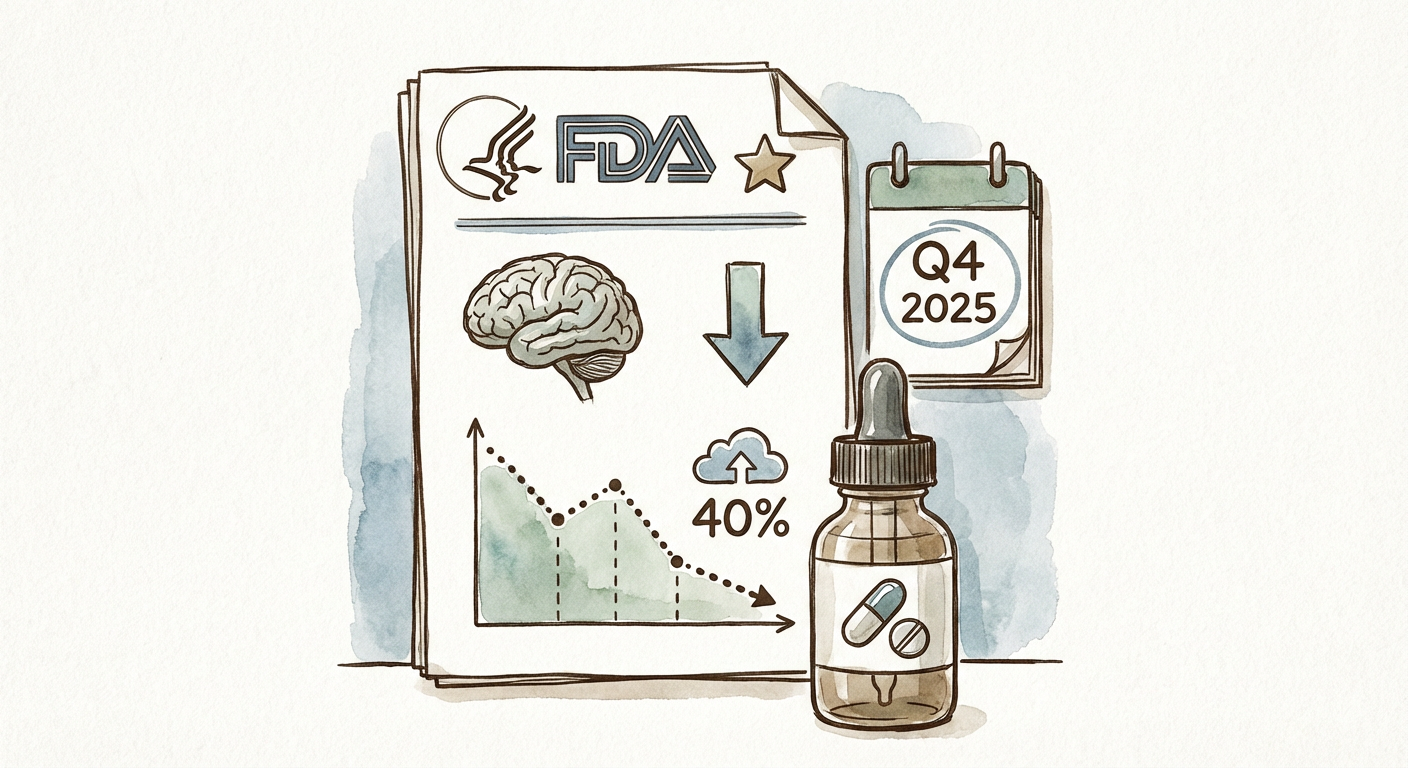
In Q4 2025, the FDA granted Breakthrough Therapy designation to a GLP-1 receptor agonist specifically for major depressive disorder. That’s significant because Breakthrough designation means the agency believes this drug shows substantial improvement over existing treatments based on preliminary trial data. The specific number: a 40% reduction in depression symptoms during the trial phase.
Before you think “that’s nice but not transformative,” consider what we’re comparing it to. Standard antidepressants take 4-6 weeks to show effect. Many people need to try multiple medications before finding one that works. And roughly 30-35% of people with depression don’t respond adequately to first-line antidepressants at all. A 40% symptom reduction in a new drug class happening faster than traditional SSRIs is the kind of shift that makes researchers actually excited. This isn’t marginal improvement. This could genuinely reshape treatment sequences.
The Numbers on Off-Label Mental Health Prescriptions Tell Us Something
Here’s where statistical literacy matters. Novo Nordisk reported in their Q4 2025 earnings that off-label mental health prescriptions for GLP-1 drugs increased 18% quarter-over-quarter. Consistent double-digit growth tells you something important: doctors are seeing results in their actual patients and responding accordingly. This isn’t driven by marketing. It’s driven by clinical observation.
The bigger picture: the NIH allocated $180 million in its 2026 fiscal budget specifically for GLP-1 neurological research. That’s the largest single-year funding commitment ever directed to this drug class for non-metabolic outcomes. When federal research money moves at that scale toward a specific area, it usually means the scientific community has spotted something real. You don’t fund what doesn’t show promise.
The distribution of that research tells you where scientists think the opportunity is: brain reward systems, addiction pathways, mood regulation. NIH National Institute on Drug Abuse GLP-1 Studies are examining everything from alcohol use disorder to behavioral addiction mechanisms. The scope is intentionally broad because researchers genuinely don’t know where the ceiling is yet.
What This Actually Means for Real Decisions
If you or someone you know is struggling with depression, alcohol use disorder, or compulsive behavior patterns, these findings don’t mean you should call your doctor tomorrow asking for semaglutide. That’s not how evidence-based medicine works. What it does mean is that your doctor has new options on the table that didn’t exist two years ago. Conversations about treatment can expand. If traditional approaches haven’t worked, there’s a genuinely different mechanism now available for investigation.
The honest probabilistic take: we’re still in early-to-mid stage research territory on the mental health applications. The alcohol use disorder data is strong. The depression Breakthrough designation is encouraging. The mechanism research out of Copenhagen is genuinely illuminating. But these are 2026 findings. We need the 2027, 2028, 2029 follow-ups to understand durability, side effects in larger populations, and long-term outcomes. That’s not pessimism. That’s how good science actually works.
What I find most interesting is the willingness to look sideways at drugs we thought we understood. We assumed GLP-1s were appetite drugs. Turns out they’re also potentially brain-chemistry drugs. That reframing alone opens doors. And every door that opens in mental health research deserves attention, because we’re talking about conditions that affect millions of people and where meaningful new options have been scarce for a long time.
The Conversation Keeps Going
If you’ve been following mental health research or addiction treatment, I’d genuinely like to hear what you’re noticing in your own circles. Are you seeing conversations shift? Has anyone in your world tried these medications for reasons other than weight? The real-world picture matters as much as the published studies. Share what you’re observing, and let’s keep this conversation grounded in actual human experience alongside the data.
Recent Comments