
The Plot Twist Nobody Saw Coming
You know that feeling when someone shows you evidence for something you thought was settled? That’s where we are with creatine right now. For decades, it lived in the gym supplement aisle, quietly helping athletes build muscle. Boring. Predictable. But here’s where it gets interesting: the brain-boosting research that started trickling in a few years ago just became impossible to ignore.

In 2025, a landmark randomized controlled trial published in Nature Mental Health Journal found that women with treatment-resistant depression who took 4 grams of creatine monohydrate daily for eight weeks saw their depressive symptoms drop by roughly 30 percent. That’s not marginal. That’s the kind of number that makes researchers sit up straighter. And for anyone who’s watched depression shrug off multiple medication attempts, you understand why this matters.
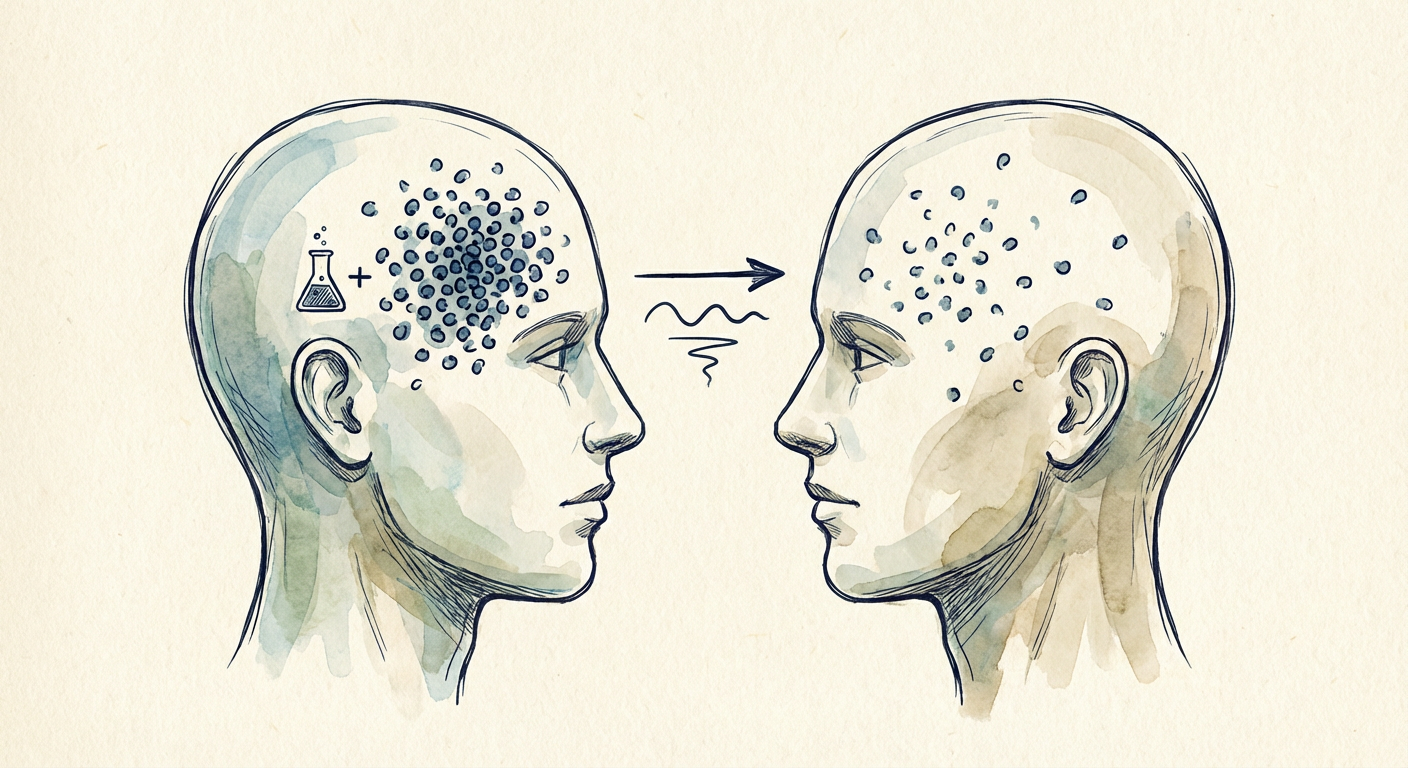
But here’s the part that should really get your attention: this benefit showed up disproportionately in women. Not because women respond to supplements differently in some mysterious way, but because of basic neurobiology. Women’s brains naturally store about 70 to 80 percent less creatine than men’s brains do. Think of it like a tank that starts half-empty. That difference might explain why the mental health gains were so pronounced.
Why This Changes the Conversation
The creatine story has always been about sustainable, incremental gains. It doesn’t create dramatic overnight changes. What it does is slowly compound benefits over time. Your brain uses creatine to produce ATP, the energy currency of your cells. More available creatine means more energy for your neurons to do their job. More efficiently. Over weeks and months.
For people over 40, this gets even more relevant. A 2025 review analyzing 22 different studies found that creatine supplementation improved working memory performance by an average of 8.5 percent in adults in that age group. Eight and a half percent might sound modest until you consider that this is about maintaining cognitive sharpness at a stage where most people assume decline is inevitable. It isn’t.
The reason this matters now is that official institutions are finally catching up. The International Society of Sports Nutrition Position Stand on Creatine updated in 2025 to explicitly recognize cognitive health and mood support as evidence-backed benefits, the first time they’d ever included these benefits in their official position. That’s significant because these folks don’t move on whims. They move on data.
Who’s Actually Taking It (And Why The Numbers Matter)
Here’s something that would have seemed wild five years ago: women now make up 35 percent of creatine supplement purchasers globally. In 2020, that number was 15 percent. The market hit 1.3 billion dollars in 2025. People aren’t buying this because of hype. They’re buying it because they’re reading the research and deciding it’s worth trying.
The other thing worth noting is that creatine doesn’t require you to believe in it for it to work. It’s not placebo-dependent. It’s biochemistry. Your brain either has enough energy to function optimally or it doesn’t. Creatine helps ensure you do.
This shift toward women accessing creatine is also a corrective of sorts. Women’s health research has historically been underfunded and understudied. Supplements and medications get tested mainly in men. So when new research specifically documents benefits in women, it’s not just interesting. It’s overdue.
The Practical Version (What Actually Matters)
If you’re thinking about trying creatine, the standard dose is five grams per day. Some people do a loading phase of 20 grams daily split into four servings for five to seven days, then drop to five grams daily. Both approaches work. The loading phase just gets you results slightly faster. You’ll typically see noticeable effects within three to four weeks.
Get creatine monohydrate. It’s the most researched, the most affordable, and the most effective. Don’t get seduced by fancy formulations. Plain creatine monohydrate. Mix it in water or your coffee or whatever. It doesn’t taste great, but it dissolves fine.
One thing worth knowing: creatine does increase water retention in your muscles, which means your muscles need more water to function. Drink more water. That’s really it, as far as side effects most people actually encounter. Your body will pull water into muscle tissue, so stay hydrated. Beyond that, the safety profile is exceptionally clean. Thousands of studies across decades confirm this.
The Long Game Is the Only Game Worth Playing
What I find genuinely refreshing about the creatine research is that it’s not promising miracles. It’s promising steady improvement. Better mood regulation. Sharper working memory. More stable energy for your brain to do the work it needs to do. Over time. This is the opposite of how most supplements market themselves.
Nobody’s going to build a viral TikTok around “compound benefits of consistent daily supplementation over six months.” But that’s exactly where the real gains live. That’s where sustainable health actually happens.
If you’ve been curious about creatine but hesitated because you thought it was just a gym thing, the research coming out of 2025 and 2026 is giving you good reasons to reconsider. If you’ve been struggling with mood or watching your memory slip as you age, the evidence is worth exploring with your doctor. If you’re already on this journey and seeing benefits, you’re ahead of most people on this one.
What’s your experience been? Have you tried creatine, or is this the first time you’re seeing the cognitive health angle? Drop a comment and let me know what questions you’re sitting with.
Recent Comments