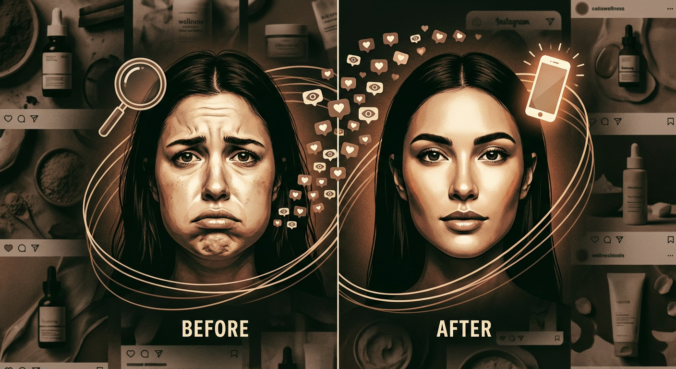
The TikTok Moment That Got Everyone Looking in the Mirror
Somewhere between late 2024 and early 2025, “cortisol face” became the wellness diagnosis nobody asked for but everyone started hunting for in their reflection. The hashtag blew up across TikTok, accumulating over 500 million views as people began attributing puffy cheeks, under-eye bags, and facial bloating to chronically elevated stress hormones. Influencers promised that fixing your cortisol would fix your face. Suddenly, your stress wasn’t just affecting your sleep or your digestion. Now it had a visible stamp on your features.

Here’s the thing about viral health trends: they usually contain a grain of truth wrapped in layers of oversimplification and exaggeration. The cortisol face phenomenon is no different. Rather than dismissing it entirely or buying into the hype, let’s actually look at what the research says and what it doesn’t say. Understanding the real connection between stress and your appearance matters more than jumping to conclusions based on how puffy your face looks on a Monday morning.
What Science Actually Says About Cortisol and Facial Changes
Cortisol is real. Stress hormones are real. And yes, chronic elevation of cortisol absolutely can change how your face looks. But here’s where the popular narrative diverges from clinical reality.
When cortisol stays elevated for months or years, it genuinely does redistribute fat in the face and body. This is well-documented in Cushing’s syndrome, a condition where the body produces excessive cortisol. Patients develop a characteristic appearance including a rounded face, often called “moon facies,” alongside a fatty hump between the shoulders. The NIH on Cushing’s Syndrome and Cortisol provides detailed clinical information about these changes. Cushing’s syndrome is rare and severe, though. The cortisol levels in that condition are dramatically higher than what everyday stress produces.
A 2025 study in Psychoneuroendocrinology found something more interesting. In people aged 25 to 40, perceived stress scores correlated with measurable spikes in cortisol in about 68 percent of participants. That’s significant. Stress does bump up your cortisol. But the study also showed that these spikes were temporary. They went up during stressful periods and came back down. The facial changes associated with mild to moderate cortisol elevation happen much more slowly, if at all, compared to the dramatic changes seen in true Cushing’s syndrome.
The Stress-Face Connection Is Real, But More Complex Than a Viral Video
Let’s be honest: stress does affect your appearance. The APA Stress in America 2025 Report found that 77 percent of adults reported physical symptoms caused by stress in the past month. Tension headaches. Muscle tightness. Sleep disruption. All of those ripple out into how your face looks and feels.
Poor sleep from stress causes under-eye bags and puffiness. Chronic tension in your jaw and shoulders can affect your facial contours. Stress can trigger inflammatory responses that make your skin look dull or reactive. Dehydration from stress hormones can make your face look drawn. You might unconsciously clench your jaw, which changes how your face sits. None of this requires your cortisol to be clinically abnormal. These are just normal stress responses.
The problem comes when people start working backward from appearance. You notice your face looks puffy. TikTok tells you that’s cortisol face. So you assume you have high cortisol. But endocrinologists have been pretty vocal about this logic chain. Dr. Caroline Messer from Lenox Hill Hospital and other specialists have publicly cautioned that you cannot diagnose elevated cortisol from facial appearance alone. The only way to know if your cortisol is actually elevated is through blood tests, saliva tests, or urine tests ordered by a doctor. Your mirror is not a diagnostic tool.
What You Can Actually Do About Stress and Your Appearance
The good news is that you don’t need to “fix your cortisol” with some trendy supplement or extreme intervention. Most people get this wrong about the cortisol conversation: you can’t eliminate cortisol, and you wouldn’t want to. Cortisol is essential. It wakes you up in the morning. It helps you respond to challenges. The problem is only when it stays elevated chronically, and that’s usually driven by lifestyle patterns, not a mysterious hormone malfunction.
The sustainable moves are the unglamorous ones. Sleep consistency. Movement you actually enjoy. Managing your actual stress load instead of just managing your perception of it. Hydration. Nutrition that supports your body instead of stressing it further. Reducing inflammatory foods if that matters for your system. These things take weeks and months to show up in your face, which is exactly why nobody made a viral trend about them. But they work. And they compound.
If you’re genuinely concerned about chronic stress symptoms or changes in your appearance, that’s worth discussing with your doctor. They can actually test your cortisol if it’s relevant, and rule out thyroid issues or other metabolic factors that affect facial puffiness. You deserve real answers, not algorithmic ones.
The Long Game: Why Slow Changes Beat Quick Diagnoses
Viral trends promise instant answers. They tell you that your puffiness means something specific and fixable in a single story arc. Real health doesn’t work that way. Real change happens slowly, through compound decisions made over months and years. Your face will reflect your habits and your stress levels eventually. But it won’t happen overnight, and it won’t happen because you took the right supplement or finally “figured out” your cortisol.
What will actually change your face is the same thing that changes everything else: consistency. Regular sleep. Regular movement. Regular management of your actual stressors. Hydration. A food approach that makes you feel good. These boring, sustainable choices are the ones that stick around and build something real.
Has anything from the cortisol face trend actually made you think differently about your stress and your health? I’d genuinely love to hear what you’ve noticed in your own experience, beyond what the algorithm is telling you to see. Sometimes the most useful health conversations happen when we step back from the trend and ask ourselves what we actually notice about how we feel and look when we’re taking care of ourselves versus when we’re not.
Recent Comments