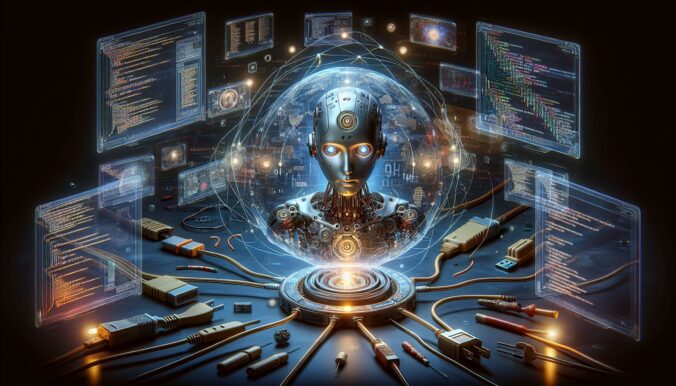
Picture machines writing symphonies, crafting scripts, and creating artworks. Wild to think about, right? AI has moved way beyond number crunching and is now muscling into creative territory that we’ve always thought belonged to humans. Let’s dig into what’s happening when artificial intelligence meets the arts.
When Silicon Dreams of Art
So what exactly are we talking about when we say AI in creative arts? This isn’t your typical optimization algorithm or recommendation engine. We’re watching AI jump from the background straight into the spotlight, trying to channel everyone from Bob Ross to Hermann Hesse. These machines aren’t just lending a hand anymore—they’re grabbing the paintbrush, the pen, and the camera.
Remember when chess players panicked over Deep Blue beating Garry Kasparov? Well, this feels like that moment, but for every creative field at once. Tools like DALL-E are spitting out bizarre, sometimes beautiful images, while GPT-3 writes with a flair that would make Edgar Allan Poe do a double-take. The data doesn’t lie—AI is getting seriously good at this creative stuff.
Digital Da Vincis: The Code Behind the Brush
Okay, let’s get into the nuts and bolts. What actually powers these digital artists? The short answer: massive amounts of data.
At the core, you’ve got machine learning algorithms that have been fed enormous collections of content. We’re talking everything from medieval ballads to modern memes. The training process is intense—these systems crunch through patterns in all that data, learning the rhythms and structures that make great art tick.
Turn one of these trained models loose on a creative task, and you might get something that reads like Charles Dickens writing for the 23rd century. Companies like OpenAI have been pushing these boundaries hard, using deep learning networks to create things that genuinely surprise even their creators.
Creating or Co-Creating? Debating Genius
Here’s where things get messy. Are these AI systems actually creating art, or are they just really sophisticated copy machines? When an algorithm generates a poem or paints a picture, is that genuine creativity or just an impressive remix of everything it learned?
I’ve seen AI-generated pieces that stopped me in my tracks, and others that felt hollow despite their technical polish. The debate splits people pretty evenly. Some argue that creativity requires consciousness, intention, lived experience—things machines don’t have. Others point out that even human artists build on what came before, combining influences in new ways.
What’s clear is that we’re not just talking about tools anymore. These systems make choices, take creative risks, and sometimes produce work that their programmers never anticipated. Whether you call that “real” creativity or not probably depends on how you define creativity in the first place.
Recent Comments